
Diamonds have always held a special place in the human imagination.
They are associated with permanence, commitment and celebration, while also carrying a deep sense of mystery that dates back to the formation of the Earth itself.
Understanding why a diamond is valued goes far beyond the sparkle we see with the naked eye. There is science, geology, history and culture behind every stone.
The purpose of this article is to explore this perspective in depth — to clearly explain the well-known 4Cs, describe the natural formation of diamonds, and clarify why these gems hold such a unique and irreplaceable place in fine jewellery.
If you want to better understand the particular qualities of your diamond, or simply learn why these gems are so highly valued, this article is for you.
And if you enjoy symbolism and mysticism, the final section may surprise you.
How Diamonds Are Formed in Nature?
A natural diamond begins its journey long before it reaches a jeweller’s hands. It forms deep within the Earth under extreme pressure and temperature, hundreds of kilometres below the surface.
This is not a process that takes years or centuries — in most cases it spans millions, even billions of years.
What we see today as a polished stone was once carbon subjected to conditions that are extraordinarily difficult to replicate outside nature.
For this reason, every natural diamond is unique. Inclusions, internal marks and subtle colour variations are not defects — they are records of the stone’s geological journey.
They are, in a very real sense, nature’s fingerprints. This individuality contributes not only to value, but also to the fascination these gems inspire.
Why Diamonds Are Expensive?
Diamonds are expensive due to a combination of factors, not simply their appearance. First, they are rare: not every diamond formed in nature reaches the Earth’s surface, and not every recovered stone is suitable for jewellery.
Secondly, the extraction process involves advanced technology, specialised labour and complex logistics. After mining, there is also strict sorting and grading, where only a small percentage of stones qualify for fine jewellery.
There is also a strong cultural dimension. Throughout history, diamonds have been linked to power, royalty, celebration and commitment.
This symbolism was not created overnight — it developed across centuries. When these elements are combined with high-level cutting, which requires precision and expertise, it becomes clear why certain stones command significant market values.
The 4Cs: The Foundation of Diamond Evaluation
The 4Cs are the internationally accepted system for evaluating diamond quality. They were designed to create objective standards, not confusion.
Together with Nick’s explanatory video on this topic, readers can see how these criteria work in practice.
Colour
Most diamonds are graded based on the absence of colour.
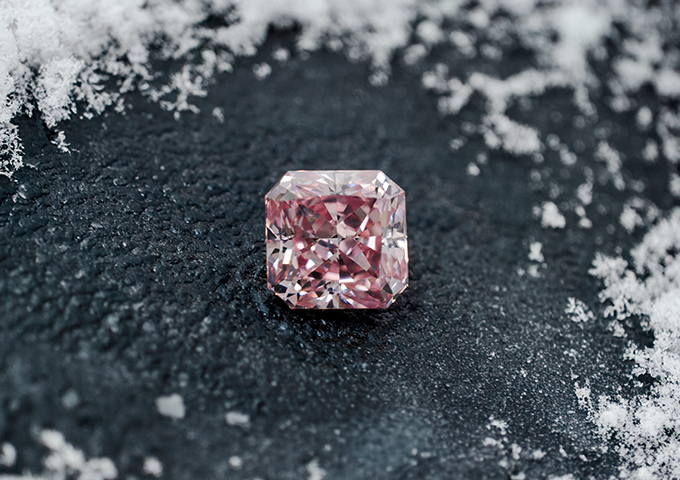
The more colourless the diamond, the rarer and more valuable it tends to be — with the exception of fancy colour diamonds, such as pink or blue, which follow a different grading scale.
Clarity
Clarity refers to the natural inclusions found within a diamond. These features tell the story of the stone’s formation and range from nearly invisible to the naked eye to clearly noticeable.
Cut
Cut is not the same as shape. It refers to how the diamond has been proportioned, cut and polished. A well-executed cut brings the stone to life by allowing light to enter, reflect and return to the eye with intensity and brilliance.
Carat
Carat measures weight, not visual size. Two diamonds with the same carat weight can differ greatly in value depending on colour, clarity and cut quality.
More important than focusing on any single C is understanding the balance between all four. It is this combination that determines both beauty and value.
Natural Diamonds vs Laboratory Diamonds
Laboratory-grown diamonds are a current topic and often raise questions. They share the same chemical structure as natural diamonds — both are crystallised carbon — but their origin is different.
One is created by natural geological processes over millions of years; the other is produced in a controlled environment over a much shorter timeframe.
Natural diamonds carry true scarcity, geological history and deeply established cultural symbolism. They are often associated with legacy and permanence.
Laboratory diamonds are generally more affordable and tend to be linked to immediate consumption. The market is still defining how these stones will perform long-term in terms of resale and symbolic value.
When natural diamonds are described as superior, this refers to rarity, heritage and cultural meaning — all essential elements in luxury jewellery.
Why Natural Diamonds Remain Unmatched in Luxury Jewellery
In high jewellery, a diamond is more than a precious material — it represents the passage of time, the celebration of milestones and family continuity. Every natural diamond is unique, and this singularity carries strong emotional significance.
They embody:
- unrepeatable geological history
- scarcity that cannot be manufactured
- connection to tradition and heritage
- enduring symbolic value
This is why natural diamonds remain the preferred choice for engagement pieces and heirloom jewellery. They are not simply worn — they are kept, remembered and passed on.
Diamonds and Mysticism: A Note for Those Who Value Symbolism and Energy
As promised at the beginning of this article, we close with a perspective from the symbolic and mystical tradition. Beyond science, geology and craftsmanship, diamonds also hold spiritual meanings across many cultures.
Ancient civilisations believed diamonds were fragments of stars or tears of the gods that had fallen to Earth. Because of their unmatched hardness, they were associated with courage, protection and invincibility.
In mystical traditions, diamonds are seen as stones that strengthen mental clarity and inner truth, helping individuals remain aligned with themselves during periods of change.
Another widely shared interpretation connects diamonds with enduring love. Long before modern jewellery traditions, they symbolised commitment and union because they do not break easily.
Some esoteric schools believe diamonds amplify intentions and emotions — perhaps one reason they appear in jewellery marking life’s defining moments, such as engagements, births and major celebrations.
Regardless of personal belief, this symbolic universe helps explain why diamonds continue to captivate. They unite science and myth, technique and meaning, matter and history — and it is precisely this combination that makes them so distinctive in fine jewellery.
Understanding diamonds is also part of the luxury experience. Knowing how they form, how they are evaluated and what makes them exceptional transforms one’s relationship with a jewel. It stops being merely beautiful and becomes truly appreciated.
Knowledge deepens appreciation — and within high jewellery, that too is a form of value. It is something we have been committed to delivering since 1984.